
In 2025, ASJ reviewers continue to make outstanding contributions to the peer review process. They demonstrated professional effort and enthusiasm in their reviews and provided comments that genuinely help the authors to enhance their work.
Hereby, we would like to highlight some of our outstanding reviewers, with a brief interview of their thoughts and insights as a reviewer. Allow us to express our heartfelt gratitude for their tremendous effort and valuable contributions to the scientific process.
Sylvie Nachtergaele, Nancy University Hospital, France
Seung Myung Wi, Samsung Changwon Hospital, Korea
Michael H. Lawless, Uniformed Services University of the Health Sciences, USA
Sylvie Nachtergaele
Dr. Sylvie Nachtergaele earned her MD degree from Belgium’s Catholic University of Louvain (UCL) in 2018, followed by surgical training from 2018 to 2024. Since November 2024, she has served as a Digestive Surgeon at Nancy University Hospital, with a specialized focus on parietal and colorectal surgery—bringing her clinical expertise to advance care in these key areas.
In Dr. Nachtergaele’s opinion, scientific publication is the lifeblood of advancing medical knowledge and clinical practice, and the peer-review system stands as its cornerstone. This process ensures published research meets rigorous standards of quality, accuracy, and relevance, making peer-reviewed literature a trusted resource for surgeons and clinicians. It guides their decision-making and directly improves patient care, bridging the gap between research and real-world practice. Reviewers play a pivotal role here: beyond validating a manuscript’s scientific rigor, they offer constructive feedback, suggest methodological tweaks, and share clinical insights—enriching the work to make it more robust and impactful. For reviewers themselves, the process also keeps them updated on the latest field developments, techniques, and innovations, fostering their own professional growth.
Even when a manuscript is rejected, Dr. Nachtergaele thinks that the feedback remains invaluable. It can illuminate new research directions, highlight needed methodological refinements, or propose alternative interpretations that strengthen the work. Authors should view peer review not as a barrier, but as an opportunity to grow—persistence in revising and reworking is vital, as scientific progress relies on researchers’ unwavering commitment to advancing knowledge and improving human health. Transparency is another non-negotiable pillar of scientific integrity: disclosing conflicts of interest (COI) and acknowledging all contributions (including those from commercial entities) preserves research objectivity. Readers, too, must stay vigilant in assessing COI disclosures to avoid biased interpretations of results, as transparency builds trust within the scientific community and with the public.
In addition, Dr. Nachtergaele reckons that research should never prioritize publication for its own sake—even amid pressures for academic or professional advancement. The true purpose of scientific inquiry is to enhance patient outcomes, elevate care quality, and add value to medical knowledge. Equally non-negotiable is adherence to ethical standards: researchers must uphold the rights, dignity, and well-being of all study participants. Ethical practices not only protect individuals but also ensure the credibility and societal value of research findings.
(by Lareina Lim, Brad Li)
Seung Myung Wi
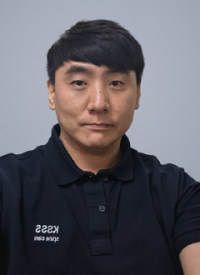
Seung Myung Wi is an orthopaedic spine surgeon and Assistant Professor at Samsung Changwon Hospital, Sungkyunkwan University School of Medicine in Korea. He earned his MD from Pusan National University College of Medicine and completed residency training in orthopaedic surgery and a spine fellowship at Seoul National University Hospital. His clinical work focuses on spine trauma, degenerative spine disorders, and vertebral augmentation. Beyond patient care, his research interests are broad, spanning clinical outcomes, imaging-driven assessment, biomechanics, and value-focused care in spine surgery. He regularly publishes in SCI-indexed journals, serves as a peer reviewer for several international journals, and mentors’ residents and medical students. Additionally, he collaborates across radiology, rehabilitation medicine, and engineering to advance patient-centered, evidence-informed spine care.
Dr. Wi points out some limitations of the current peer-review system: variability in rigor, limited methodological/statistical expertise among reviewers, lack of transparency, slow turnaround times, minimal recognition for reviewers, under-disclosed conflicts of interest (COIs), and inconsistent assessment of replication, data availability, and reporting standards. To address these, he proposes multiple improvements:
- implement structured review checklists covering methods, statistics, ethics, and data/code availability;
- routinely involve statistical/methods editors to strengthen technical evaluation;
- refine journal triage processes to avoid "revise-reject" cycles;
- offer optional transparent or signed reviews to boost accountability;
- adopt registered reports for hypothesis-driven research;
- provide stronger incentives for reviewers (e.g., formal CME/CPD credit, ORCID crediting, reviewer certificates, and editorial pathways);
- develop concise training modules and exemplars to harmonize reviewer expectations.
To balance peer review with clinical, teaching, and research responsibilities, Dr. Wi follows a structured approach. He only accepts manuscripts within his expertise and without potential COIs, and batches reviews into protected 60 to 90-minute blocks (often early mornings). He often uses a template to streamline evaluation: (i) one-paragraph summary of the study and key claims; (ii) assessment of internal validity (design, bias, statistics); (iii) analysis of external validity (generalizability, value); (iv) check of ethics, data sharing, and reporting guidelines; (v) review of clarity and clinical relevance. Moreover, he sets a personal time cap (3–4 hours total per paper, including a second pass) and declines promptly if unable to meet reasonable deadlines.
(by Lareina Lim, Brad Li)
Michael H. Lawless
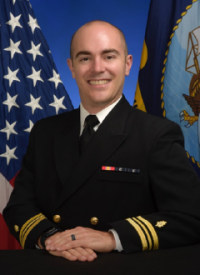
Dr. Michael Lawless is a board-certified staff Neurosurgeon at Naval Medical Center San Diego (NMCSD) and Assistant Professor of Surgery at the Uniformed Services University of the Health Sciences. He earned his medical degree from West Virginia School of Osteopathic Medicine on a U.S. Navy Health Professions Scholarship. He then completed his Neurosurgery Residency at Michigan State University, Ascension Providence Hospital in Southfield, MI, in 2023. He is currently the Assistant Department Head of Neurosurgery at NMCSD. He also serves as an Ad Hoc Reviewer for the Journal of Spine Surgery and the Neurosurgery Journal. He recently completed an assignment at Naval Hospital Okinawa from July-November, 2025, during which he performed the first endoscopic spine surgery on Okinawa, increased neurosurgical volume eight-fold and was an invited speaker at the Chubu Tokushukai Hospital. He has over 25 professional publications, presentations, and has won national neurosurgical research awards.
ASJ: Why do we need peer review?
Dr. Lawless: Peer review is essential for maintaining the highest level of scientific rigor. To ensure that valid research is being conducted, with trustworthy methods leading to meaningful results, forming the foundation for evidence-based medicine. The peer-review process is critical for the advancement of science and medicine, leading to reduction of human suffering, and increased quality and quantity of life.
ASJ: What are the limitations of the existing peer-review system?
Dr. Lawless: Current academic models incentivize the production of research for the sake of advancement or attainment of residency and fellowship slots. Emphasis on quality and not quantity of publications should continue to be the focus. Increased funding by government and non-government entities to support well-designed and conducted research studies and trials to support meaningful research.
ASJ: Would you like to say a few words to encourage other reviewers who have been devoting themselves to advancing scientific progress behind the scene?
Dr. Lawless: The unseen hours of work and attention you give to the peer review process serve as the bulwark for the true, honest pursuit of scientific knowledge and advancement of your field of expertise. You are the defenders of truth and protect the public with every single paper you review. You also serve to help your colleagues improve in their research journey with your constructive feedback. You are the true heroes of our profession.
(by Lareina Lim, Brad Li)
