
In 2026, many ASJ authors make outstanding contributions to our journal. Their articles published with us have received very well feedback in the field and stimulate a lot of discussions and new insights among the peers.
Hereby, we would like to highlight some of our outstanding authors who have been making immense efforts in their research fields, with a brief interview of their unique perspective and insightful view as authors.
Outstanding Authors (2026)
Marc Soler, Clinique Saint Jean, Cagnes sur Mer, France
Alvaro Ducas, University of Illinois Chicago, USA
Thomas J. Buell, University of Pittsburgh, USA
Hugo Monteiro Neder Issa, University of Ottawa Heart Institute, Canada
Outstanding Author
Marc Soler
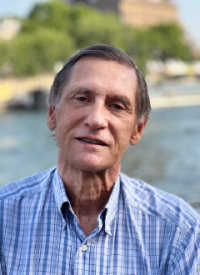
Dr. Marc Soler, Clinique Saint Jean, Cagnes sur Mer, France, is a surgeon specialized in abdominal wall surgery and inguinal hernia repair. He is considered the last active trainee of René Stoppa, which strongly influences his ongoing commitment to promoting preperitoneal surgery for inguinal hernias. His clinical and academic work focuses on open preperitoneal techniques (OPPs), including MOPP, TIPP, and TREPP/Ugahary-type approaches, with the objective of clarifying their indications and encouraging their integration into daily surgical practice. Since 2024, his team has published several articles dedicated to OPP techniques and their role alongside Lichtenstein, laparoscopic, and robotic repairs, particularly in fragile or high-risk patients. Dr. Soler is a frequent speaker at international congresses and has developed longstanding professional and personal collaborations in Asia, through repeated participation in APHS congresses over nearly two decades and in South Korea (Ksers congresses). Connect with him on Facebook and LinkedIn.
ASJ: What are the most commonly encountered difficulties in academic writing?
Dr. Soler: One of the main difficulties in academic writing is transforming ideas into clear, concise, and structured messages. Researchers often have extensive clinical or scientific experience, but writing requires a different skill set. Another challenge is maintaining scientific rigor while keeping the manuscript readable and engaging. Time constraints, language barriers for non-native English speakers, and the pressure to publish also contribute to the difficulty. In surgery specifically, it can be challenging to compare heterogeneous studies and avoid personal or institutional biases when interpreting results.
ASJ: The burden of being a scientist/doctor is heavy. How do you allocate time to write papers?
Dr. Soler: Writing papers requires discipline and long-term organization. Clinical activity usually comes first, so academic writing often takes place during evenings, weekends, or protected research time when available. I try to work progressively, in short sessions, and waiting for large blocks of free time. Collaboration is also essential: sharing tasks with colleagues, statisticians, and co-authors makes the process more efficient. In my experience, integrating research questions directly into daily clinical practice helps maintain motivation and makes writing more meaningful.
ASJ: What is fascinating about academic writing?
Dr. Soler: Academic writing is fascinating because it allows us to transform clinical experience into shared knowledge that can improve patient care beyond our own institution. It is a way to question our practices, challenge established ideas, and contribute to scientific progress. I also appreciate the international dimension of academic publishing, which creates opportunities for collaboration and discussion with colleagues from different countries and backgrounds. Finally, writing forces us to think critically and rigorously, which ultimately improves both research quality and clinical practice.
(by Brad Li, Masaki Lo)
Alvaro Ducas
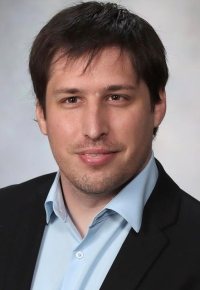
Alvaro Ducas earned his medical degree from the National University of La Plata, followed by completion of a General Surgery residency program at the National University of Comahue. During his residency training, he participated in multiple conference presentations including the European Hernia Society (Germany) and the International Hepato-Pancreato-Biliary Association (United States) as well as internship in the Mayo Clinic and University of Colorado. In 2023, he joined the Division of Minimally Invasive and Robotic Surgery at the University of Illinois Chicago under the mentorship of Dr. Pier Cristoforo Giulianotti, initially serving as a research fellow and later becoming Director of the Surgical Innovation Training Laboratory (SITL). His research focuses on robotic surgery, with a particular interest in metabolic and bariatric surgery. He has also contributed to research projects evaluating experience and clinical outcomes with the da Vinci SP Surgical System alongside Dr. Francesco Bianco. Follow him on LinkedIn and Instagram.
The way Dr. Ducas sees it, academic writing requires precision as well as curiosity. Strong research methodology is essential: identifying relevant clinical questions, designing studies appropriately, interpreting data objectively, and recognizing the limitations of one’s work. To him, robotic surgery is a field that evolves every day, so it is important to remain up-to-date and open-minded about what comes next. Many things that may seem impossible today could become reality in the near future. Academic writing can challenge, shape, and change how we think about what is possible in medicine.
In robotic surgery research, avoiding bias means staying objective from study design through publication. Dr. Ducas would use standardized protocols, predefined outcome measures, and report both positive and negative findings transparently. In writing, he believes that it is important not to overstate the benefits of robotic systems and to clearly discuss limitations, learning curves, and possible confounding factors.
“My motivation to engage in academic writing comes from knowing that our research can contribute to the future of both the scientific community and patient care. Looking back at our publications and results, it’s rewarding to see that even small contributions can help advance the field and potentially inspire other researchers to build on that work and achieve something even greater. In such a rapid evolving field, academic writing is a way to continue to push myself to keep learning, questioning, and improving outcomes for patients,” says Dr. Ducas.
(by Brad Li, Masaki Lo)
Thomas J. Buell
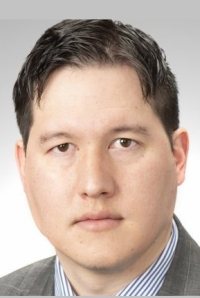
Dr. Thomas J. Buell, MD, serves as the Director of Scoliosis and Spinal Deformity and the Co-director of the Complex and MIS Spine Fellowship at the University of Pittsburgh Department of Neurological Surgery. He completed his neurological surgery residency at the University of Virginia, completing an enfolded CAST-accredited complex spine fellowship, an enfolded CAST-accredited endovascular fellowship, and an international fellowship at Auckland City Hospital, New Zealand. He then completed a combined orthopedic and neurosurgical AO Spine adult and pediatric complex spine and oncology fellowship at Duke University. Dr. Buell specializes in complex spinal reconstructive surgery for treatment of all spinal deformities of the cervical, thoracic, and lumbar regions. He has been actively engaged in clinical research, both prospectively and retrospectively, to evaluate which treatments provide greatest clinical benefit while minimizing complications. He is a member of the International Spine Study Group. His research interests focus on clinical outcomes after spinal surgery. Learn more about him here.
ASJ: What are the qualities an author should possess?
Dr. Buell: An author should possess intellectual curiosity, scientific integrity, and humility. Curiosity drives us to ask meaningful clinical questions, while integrity ensures that we pursue and report the answers honestly, regardless of the outcome. Good authors are also disciplined and detail-oriented, recognizing that high-quality research requires rigor, persistence, and careful attention to methodology. Finally, the best authors are collaborative – they value the expertise of colleagues across disciplines and understand that impactful research is rarely accomplished alone. Ultimately, the goal of authorship is not simply to publish papers, but to generate knowledge that meaningfully improves patient care.
ASJ: The burden of being a scientist/doctor is heavy. How do you allocate time to write papers?
Dr. Buell: The burden is heavy, and I don't think there's a perfect balance. Clinical responsibilities are always demanding, especially at a Level 1 Trauma Center like Pittsburgh, but I view research as an extension of caring for patients rather than something separate from it. Every patient encounter raises questions that deserve better answers, and writing is one way we improve care for the next patient. Practically, it requires intentionality. I try to protect dedicated time for writing whenever possible. More importantly, I work with an outstanding team. Academic medicine is collaborative, and meaningful research is built through partnerships with residents, fellows, research coordinators, statisticians, and colleagues who share the same commitment to advancing the field. You also have to accept that not every day will be equally productive. Progress often comes from consistent, incremental work rather than waiting for long blocks of uninterrupted time. If you're disciplined about making steady progress, those small efforts eventually become completed manuscripts.
ASJ: From an author’s perspective, do you think it is important to follow reporting guidelines during preparation of manuscripts?
Dr. Buell: Yes, I think they're important. Reporting guidelines aren't just about satisfying journal requirements, but ensure scientific rigor, transparency, and reproducibility. They help authors communicate their methods and results clearly, allowing readers to accurately interpret, reproduce, and build upon the work. Ultimately, better reporting leads to better science and, hopefully, better patient care.
(by Brad Li, Masaki Lo)
Hugo Monteiro Neder Issa
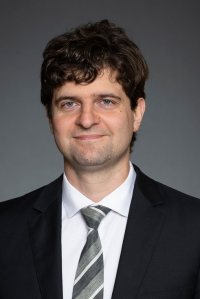
Dr. Hugo Monteiro Neder Issa is a cardiac surgeon at the University of Ottawa Heart Institute (UOHI) and at the Children’s Hospital of Eastern Ontario. He is also an Assistant Professor in the Division of Cardiac Surgery in the Department of Surgery at the University of Ottawa. He has been conducting research in the field of adult and congenital cardiac surgery. He is interested in surgical approaches and treatment for coronary artery disease, heart valve disease, and congenital heart diseases. He is also interested in less invasive operative techniques. Connect with him on Instagram and LinkedIn.
To Dr. Issa, a strong academic paper has a clear purpose, addresses an important question, uses appropriate methods, presents honest findings, and acknowledges limitations. The best papers convey complex ideas simply and precisely without overstating conclusions. He particularly values publications detailing surgical techniques, especially with operative videos. Although surgery relies on science and evidence, outcomes depend heavily on judgment, technical skill, and attention to detail. His mentors taught him that preventing avoidable technical injury is a surgeon’s key responsibility. Even careful operations carry risks, but surgeons must minimize preventable harm. In elective cardiac surgery, near-zero mortality and minimal complications are now expected. A major goal of his academic career is to share practical, reproducible operative experience. Papers that help surgeons avoid pitfalls and operate more safely directly improve patient care.
According to Dr. Issa, one of the greatest challenges in academic writing is distilling a large volume of information into a clear, coherent message. Researchers, deeply immersed in their subject, often struggle to separate essential points from distracting details. Maintaining a logical narrative while staying concise is demanding. Another challenge is striking the right balance between confidence and caution—explaining the significance of findings without overstating the data’s support. Collaborative writing adds further complexity due to differing perspectives, priorities, and styles among co-authors. He believes these challenges are best met by defining the core message early, revising the manuscript multiple times, and seeking thoughtful feedback. Excellent academic writing is rarely achieved in the first draft; it emerges through careful refinement.
“What fascinates me most about academic writing is its ability to transform individual experience into shared knowledge. In surgery, a technical insight, an unexpected outcome, or a recurring clinical observation may begin with a single patient. Through careful analysis and writing, that experience can become useful to colleagues and ultimately benefit patients far beyond one institution,” says Dr. Issa, “Academic writing also encourages intellectual discipline. It requires us to question our assumptions, examine the evidence, and explain our reasoning clearly. I particularly enjoy writing about surgical techniques because it creates a bridge between the operating room and the broader scientific community. When combined with images and surgical videos, writing can preserve technical knowledge, make complex procedures more accessible, and help the next generation of surgeons learn from the collective experience of others.”
(by Brad Li, Masaki Lo)